Appearance

The RefArch architecture distinguishes two common patterns for access from outside the internal network. The exact infrastructure products can vary, but the architectural ideas remain the same.
This scenario covers applications that are primarily intended for internal users but must also be reachable from arbitrary devices over the internet.
External access for internal users:
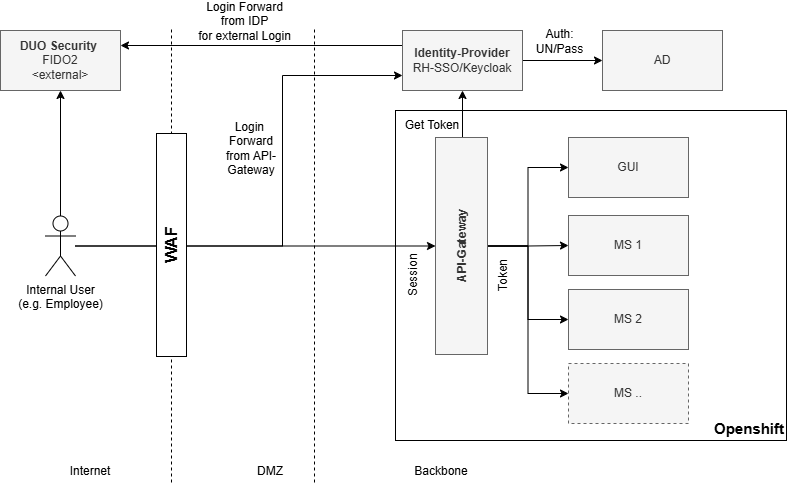
Typical characteristics of this setup are:
This scenario covers applications that must be used by users without internal accounts, such as citizens, companies or partner organizations.
External user access:
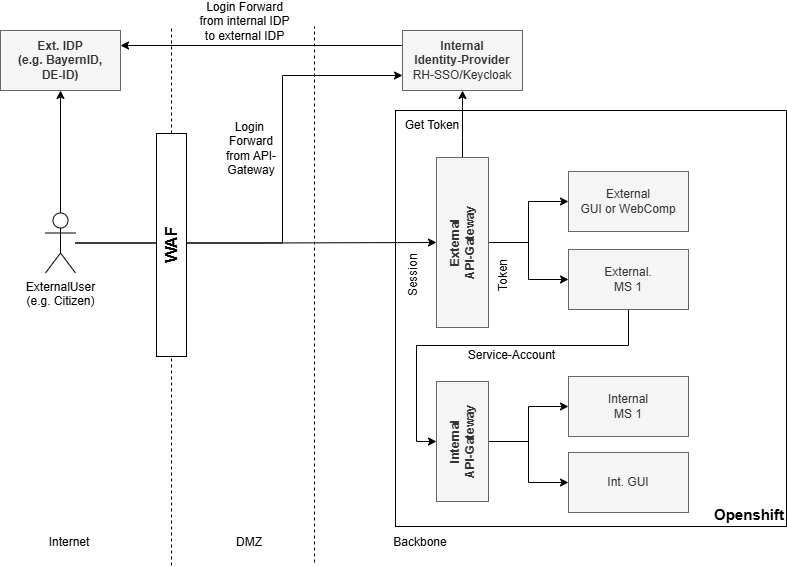
Typical characteristics of this setup are:
When both internal and external identities must be supported, separating these concerns at the architectural level keeps authentication, authorization and operational boundaries manageable.