Appearance

RefArch applications usually provide one or more graphical user interfaces for interacting with backend services. The architecture focuses on one centralized frontend and supports web components as an optional integration style.
In the centralized model, one frontend provides the user-facing application shell and coordinates access to backend capabilities.
Centralized frontend architecture:
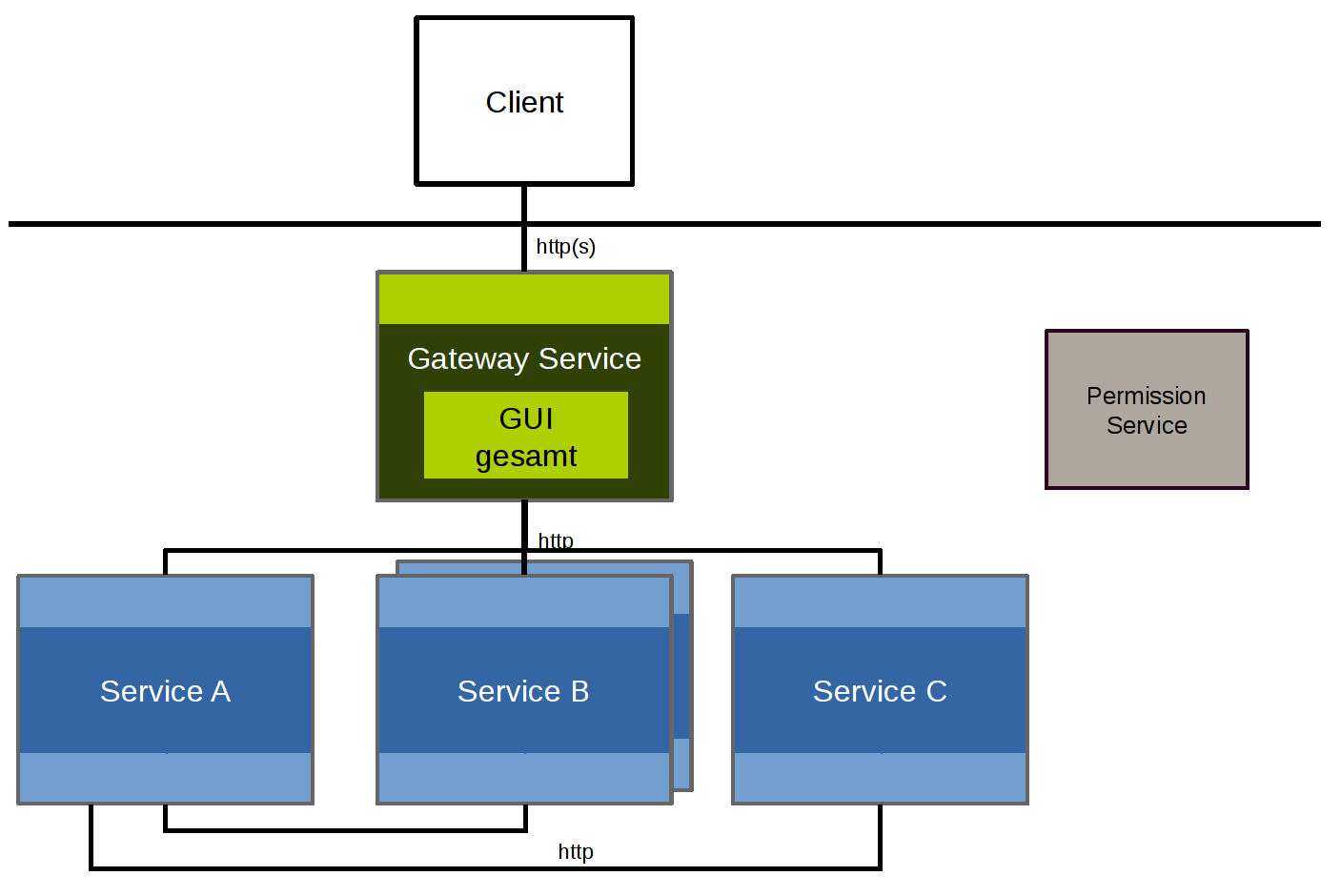
This remains the default pattern because it is easier to build, operate and reason about than more fragmented UI compositions. In the current RefArch implementation, the frontend is built and deployed separately from the gateway as described in ADR001, but it still forms one coherent frontend for the application.
Web components are an optional addition when parts of the UI should be provided independently from the main frontend.
In RefArch, this is reflected by the dedicated webcomponent template and the surrounding tooling:
This makes web components a good fit for reusable UI modules or integrations into an existing host application, while keeping the main RefArch setup centered around one dedicated frontend service. Additional details can be found in:
The current default is:
This keeps the standard setup simple while still allowing independently delivered UI building blocks where they provide clear value.